Why Pursue a Master's Degree in Social Work
Community Impact
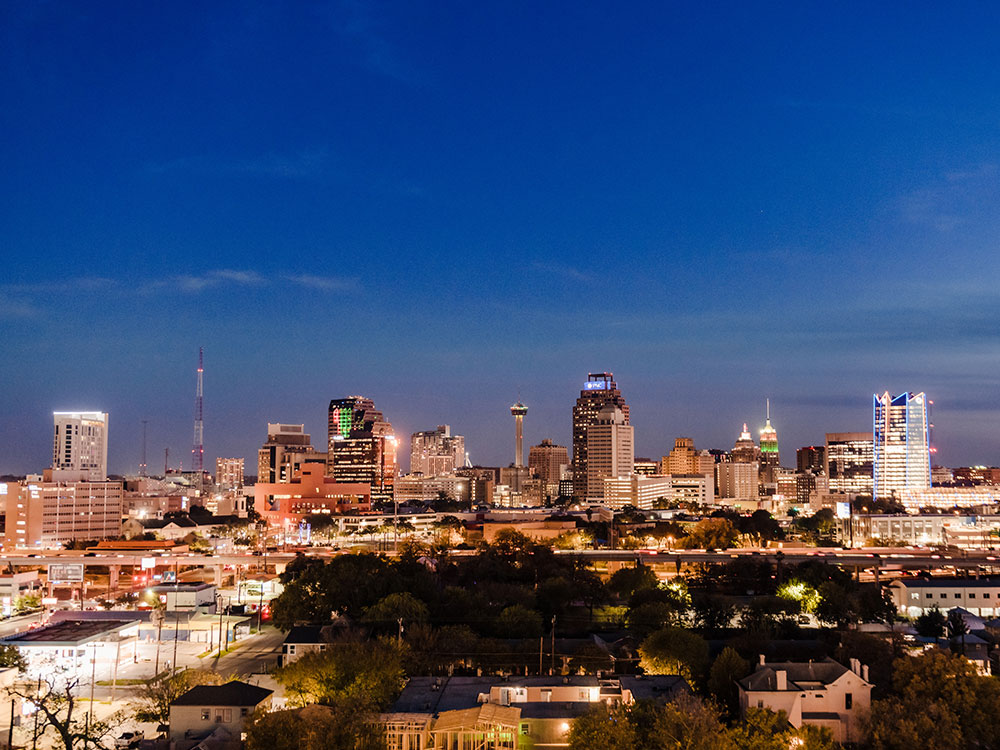
UT San Antonio is proud to partner with communities in San Antonio and beyond, which create a wide range of possibilities for student practicum experiences. In addition to engaging with the community, students engage with dedicated faculty and with one another through campus organizations. On the state licensing exam, students and alumni from the MSW program have a passing rate that is significantly higher than the national passage rate. MSW alumni are transforming lives and organizations in San Antonio and across the country.
See What Our Students Say
The Master of Social Work program focuses on transformative, culturally competent practice. Alumnus Rogelio Narvaez talks about his meaningful work in San Antonio since earning his degree.
Degree Options
Admission & Application Requirements
Applications are submitted through the UT San Antonio Graduate Application. Please upload all required documents (listed below) on your UT San Antonio Graduate Application. It is the applicant’s responsibility to ensure completion and submission of the application, a nonrefundable application fee, and all required supporting documents are on file with UT San Antonio by the appropriate application deadline.
| Social Work (MSW) | ||
|---|---|---|
| Required Degree | Bachelor's Degree from an accredited college or university in the United States or have proof of equivalent training at a foreign institution. | |
| Minimum GPA | 3.0 (on a 4.0 scale) Departments may consider GPA of last 60 semester credit hours | |
| Coursework | Completed adequate credit hours or foreign institution equivalent coursework as preparation for the program. | |
| Transcripts* | Required from all institutions attended; international transcripts must be recorded/translated to English | |
| Credential Evaluation | Required if you have earned university-level credit from foreign institutions. Submit an evaluation of your transcripts from FCSA or any NACES-approved credential evaluation agency. | |
| English Language Proficiency | 79 TOEFL iBT / 6.5 IELTS / Duolingo 100 For exams taken on or after January 21, 2026: We require a minimum TOEFL iBT score of 4.0. |
|
| Purpose Statement | Required Your purpose statement should be a narrative no longer than five double-spaced pages that should address the questions found in this MSW narrative document. | |
| Letters of Recommendation | 3 academic or professional reference(s) demonstrating your attributes for successful completion of this program (you will request these through the Graduate Admissions Application; let your recommenders know of your deadline to ensure submissions are on time). For the 36-hour program, 2 letter of reference should be from a BSW program/field director, indicating your good-standing and how many hours were completed in field practicum. | |
| Field Evaluation | Required for the 36-hour program | |
| Liberal Arts Perspective | Required for the 60-hour program. Form must be completed in the graduate application. | |
| *Unofficial transcripts will be taken into consideration for admissions; however, if admitted into the program, you must submit official transcripts to the University. | ||
Application Deadlines
Applicants are encouraged to have their admission file completed as early as possible. All applications, required documents and letters of recommendation, if applicable, must be submitted by 5:00 PM U.S. Central Time on the day of the deadline. Deadlines are subject to change.
| Social Work (MSW) | |||
|---|---|---|---|
| Timing on Admission Decision: Completed applications will be reviewed as they are received. Decisions generally will be made and sent to applicants within 4 to 6 weeks of receiving the completed application. | |||
| Application Deadlines for: | Priority | International | Domestic |
| Spring 2027 | November 1 | December 1 | |
| Summer 2027 | Not Available | Not Available | |
| Fall 2027 | June 1 | June 1 | |
| Spring 2028 | November 1 | December 1 | |
| Summer 2028 | Not Available | Not Available | |
Funding Opportunities
Title IV-E of the Social Security Act authorizes the federal government’s Foster Care and Adoption Assistance programs to provide matching funds to state educational programs. Students who qualify will receive a stipend under the Title IV-E program to help off-set costs associated with obtaining a Master of Social Work. For more information, click below.
For information about scholarships, click below.
Learn moreCareer Options
UT San Antonio prepares you for future careers that are in demand. The possible careers below are based on data pulled by a third-party tool called Emsi, which pulls information from sources like the U.S. Bureau of Labor Statistics, U.S. Census Bureau, online job postings, other government databases and more to give you regional and national career outlook related to this academic program.
The Master of Social Work program was fully accredited by the Council on Social Work Education (CSWE) in February 2008, with reaffirmation in 2012 and 2021, making it a CSWE accredited program through 2028.
Our curriculum blends theory, hands-on experience and critical analysis to prepare students to be compassionate, culturally responsive and impactful leaders in social work. Courses such as Human Behavior and Social Environment, Social Problems and Social Welfare Policy Analysis and Generalist Social Work Practice build an understanding of individual, family and societal dynamics.
The program takes students through a progressive fieldwork sequence all paired with seminars to help students connect classroom learning to direct service. Students develop advanced skills with courses such as Specialized Methods in Work with Individuals, Groups, and Communities, Children and Families and Policy Practice and Advocacy, as well as Multidimensional Assessment for comprehensive client understanding.
With a focus on global impact, students also take Culturally Competent Practice with Diverse Populations and Global Context of Social Work, ensuring they’re prepared to serve in an interconnected world.
This program is offered at the UTSA Downtown Campus for part-time or full-time students. We offer primarily evening classes, with some day classes, to provide options for a variety of schedules. Evening classes meet once a week during the fall, spring, and 10-week summer sessions and twice a week during 5-week summer sessions.
Students also do two 450 clock hour field practicum while in the program, which means working in an agency setting 12-15 hours a week for four of the semesters they are in the program. Occasionally, weekend and evening placements are available, but students should plan on trying to be available for field approximately 8 hours per week during the regular 8-5 work week to increase placement opportunities.
Frequently Asked Questions
Yes, many of our students pursue their clinical licensure after completing an MSW at UT San Antonio. We offer a licensure preparation course to our current students in their final semester at no-cost. This prepares our MSW students for their LMSW, which gives access to initiate the LCSW supervision process in or outside of Texas.
Many of our MSW graduates pursue rewarding careers in policy, advocacy, community organizing, and counseling. Settings are wide in range, inclusive of healthcare, local non-profit, local, national, and global government, as well as private practice agencies. Areas of work include veteran-based services, substance-use and general mental health intervention, policy advocacy and legislative development, hospital, detention, school, and community agency settings. Social Workers are dedicated to working with marginalized and underserved populations within many roles.
There are four tracks offered in our MSW program:
The 60 hour curriculum is built for students who do not have a BSW, or earned their BSW over ten years from the time of application.
The 36 hour curriculum is offered to students who have earned their BSW within ten years of their application to our program.
We offer a full time or part time option for both 60 and 36 hour students. Depending on the student curriculum track and attendance pace, the program length can range from one year to three years, but must be completed within six years from start to finish. MSW students may pause their classes if needed, during coursework, by working closely with the program GAR to adjust their degree plan.
Practicum setting selection, coursework exposure to community collaboration, educator diversity, alumni collaboration