
Why Pursue a Bachelor's Degree in Neuroscience
Our Neuroscience program allows students to explore brain function and disease across multiple disciplines, including neurobiology, psychology, and computational sciences. UT San Antonio offers a broad scope of neuroscience where the student can study how the brain functions from the molecular level, to cells, systems, and behavior. An undergraduate degree in Neuroscience is an outstanding preparation for graduate school, medical or dental school, as well as a wide range of careers including biotechnology, other health professions, teaching, and artificial intelligence.
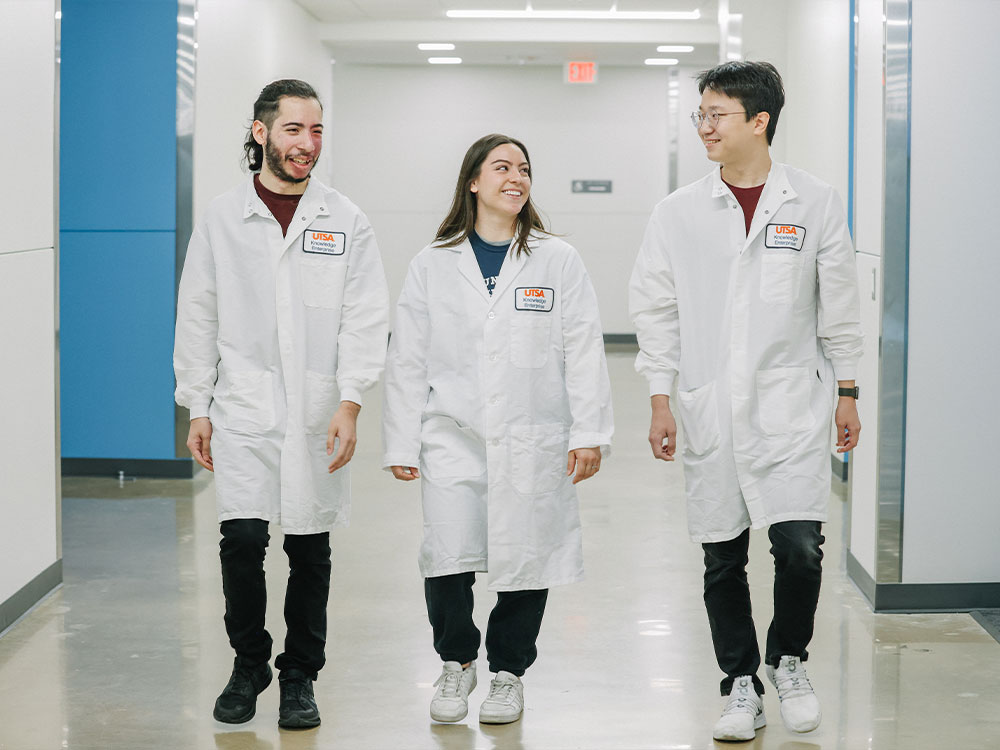
Pathways to Science Professions
UT San Antonio’s Neuroscience degree allows students to study multiple fields such as biology, psychology and statistics. Neuroscience is the study of the nervous system through brain-focused science. This program focuses on discovering the neural bases of experience, behavior and disease. Students studying Neuroscience may consider becoming involved in:
- The Pre-Medical Society at UT San Antonio
- Brain Wave Society
- Beta Beta Beta (Tri-Beta) Biological Honor Society
- NPRE (NDRB Pre-Freshman Research Experience)
- Psi Chi International Honor Society in Psychology
Admission Requirements
When you apply to UT San Antonio, you select the major you'd like to study. The choice of major will not impact if you get admitted to the University (all students must meet UT San Antonio's general admission requirements); however, some majors will require additional admission requirements to be able to declare the major your freshman year.
| Neuroscience: There are no additional admission requirements to declare this major. You must meet UT San Antonio’s general admission requirements. |
Scholarships
Pro Tip: Even if you don't think you will qualify for financial aid, you should still submit the FAFSA! Information from the FAFSA could impact certain scholarships that are even merit-based.
UT San Antonio Scholarship Hub
Through one general scholarship application, you can automatically be considered for dozens of scholarships at UT San Antonio, including scholarships that are available for this major. In order to access all available scholarship applications on the UT San Antonio Scholarship Hub, you must be an admitted student. If you are a student applying for admission, but have not yet been admitted, you may sign in and complete the Scholarship Hub’s General Application as long as you have authenticated your myUTSA ID and Passphrase. Once you are admitted to UT San Antonio, please sign back in to the Scholarship Hub to see if there are any additional scholarship opportunities available for you to pursue.
UT San Antonio Scholarship Hub College of Sciences Scholarships
Distinguished Scholarship
UT San Antonio offers an automatic merit-based scholarship to incoming new freshman and transfer students who display exceptional scholastic achievement in high school by the priority deadline. Non-resident and international students awarded a Distinguished Scholarship for a minimum of $1,000 for the academic year will be granted a waiver for non-resident tuition if scholarship eligibility is maintained. This means out-of-state and international students could pay in-state tuition! For fall admitted freshmen, this scholarship is valued up to $20,000 for up to four years. For fall or spring admitted transfer students, this scholarship is valued up to $6,000 for up to two years. Renewal eligibility must be maintained and funding must be available.
Distinguished ScholarshipsUT San Antonio Bold Promise
Although not a scholarship, UT San Antonio is committed to cover tuition and mandatory fees 100% for eligible students who come from low and middle-income Texas families.
UT San Antonio Bold PromiseCareers, Salary & Skills
UT San Antonio prepares you for future careers that are in demand. See possible careers below. This data is pulled by a third-party tool called Emsi, which pulls data from sources like the U.S. Bureau of Labor Statistics, U.S. Census Bureau, online job postings, other government databases and more to give you regional and national career outlook related to this academic program. On top of the resources your college will provide, the University Career Center offers several resources to help students identify and develop the global skills necessary to successfully pursue and achieve lifelong career goals.

Minors & Certificates
After selecting a major area of study and enrolling at UT San Antonio, degree-seeking students can choose from a variety of minors and certificates to supplement their education. Although not required, minors and certificates can help students customize their UT San Antonio experience based on their passions and unique career goals.
Explore All Minors & CertificatesFrequently Asked Questions
The Neuroscience program at the University of Texas at San Antonio is an interdisciplinary science degree focused on understanding how the brain and nervous system work—from molecules and cells to behavior and cognition. It’s offered through the Department of Neuroscience, Developmental and Regenerative Biology in UT San Antonio’s College of Sciences. UT San Antonio offers a Bachelor of Science (B.S.) in Neuroscience, which requires about 120 credit hours to graduate. The program combines several fields: Biology, Psychology, Chemistry, Mathematics & statistics and Computational science. Students learn how the nervous system works from molecules → cells → neural circuits → behavior. Some of the main subjects include: Neurobiology and neurophysiology, Brain anatomy and signaling, Neural information processing, Behavior and cognition and Neurological diseases. Intro courses include: Introduction to Neuroscience, Biology and Psychology. Later courses include upper-division neurobiology labs and electives.
Concentrations: Students can customize the degree with different focus tracks such as: Behavioral neuroscience, Molecular neuroscience and Pre-medical neuroscience (for students planning medical school)
Core Areas & Themes:
- Cellular & Molecular Topics
- Systems & Behavioral Neuroscience
- Cognitive & Data Science
- Brain Disorders
The degree offers Concentrations in Behavioral Neuroscience, Molecular Neuroscience, Pre-Medical Neuroscience and Developmental and Regenerative Sciences
A degree in Neuroscience opens doors to careers in healthcare, research, technology, business and public service. Because neuroscience combines biology, psychology, chemistry, physics and data analysis, it’s highly versatile.
Examples include: Medical & Health Professions, Research & Academia, Biotechnology & Pharmaceutical Industry, Tech, Data & AI, Law, Policy & Ethics and Education & Communication.
The B.S. in Neuroscience at The University of Texas at San Antonio is designed to prepare students for graduate programs (M.S. or Ph.D.), medical school and other advanced training by providing:
- Interdisciplinary Scientific Foundation
- Advanced Coursework and Laboratory Training
- Undergraduate Research Opportunities
- Mentorship and Faculty Collaboration
- Development of Professional and Academic Skills.
Yes, students may join a research lab in the following areas:
Neuroscience
This area studies how the brain and nervous system work.
Topics include:
Neural signaling and electrophysiology
Learning and memory
Motivation, reward, and addiction
Language and auditory processing
Computational neuroscience
Brain development
Neurodegenerative diseases (e.g., Alzheimer’s or Parkinson’s)
Students may use methods such as:
Behavioral experiments
Brain imaging
computational modeling
molecular neuroscience techniques.
Developmental Biology
This research examines how organisms grow and develop from cells to tissues and organs.
Example topics:
Embryonic development
Cell differentiation
Gene regulation during development
Organ formation
Developmental disorders
Students often study how cells receive signals that control their growth and identity.
Regenerative Biology and Medicine
This field studies how tissues repair or regenerate after injury or disease.
Key research topics include:
Stem cells
Tissue regeneration
Cell replacement therapies
Tissue engineering
Organ regeneration
transplantation biology
This work helps develop new treatments for diseases and injuries.
Cell and Molecular Biology
Researchers investigate how cells function at the molecular level.
Topics include:
DNA, RNA, and protein interactions
Gene expression
Cell signaling
Cell cycle regulation
Immunology and infectious disease
Cancer biology
Students may work with techniques such as:
cell culture
microscopy
molecular genetics.
Genomics and Bioinformatics
Some labs focus on analyzing biological data using computers.
Research areas include:
Genomics and epigenomics
bioinformatics and computational biology
large-scale biological data analysis
protein and gene networks
Students often learn programming tools like Python or R for biological data analysis.
Stem Cells and Disease Modeling
Another growing area uses advanced lab models to study disease.
Examples:
organoid systems (“mini-organs” grown in labs)
“disease-in-a-dish” models
fertility and reproductive biology
cancer and cell-cycle regulation
These models help scientists test treatments and understand disease mechanisms.”
The Honors Experience
Realize your full potential at The University of Texas at San Antonio’s Honors College. Rooted in experiential learning, our classes and programs are hands-on, project-based, and customizable to fit your individual goals. Students in any majors can get invited to our Honors College. Turn your passions into marketable skills for the future!
Why Join Honors?
In the News
UT San Antonio neuroscientist Alfonso Apicella conducted a recent study with his team identifying a previously unrecognized neural pathway relating to how the brain processes auditory information. While this is merely a first step, it’s a significant discovery that may change how we view conditions related to sensory input. This is just one example of the amazing discoveries Roadrunners can make at our Tier One Research university!
Read the full article “Another piece of the brain puzzle: Researcher uncovers a hidden neural pathway” to learn more about this new discovery about the human mind.
For more news stories, visit UT San Antonio today.
Why UT San Antonio?
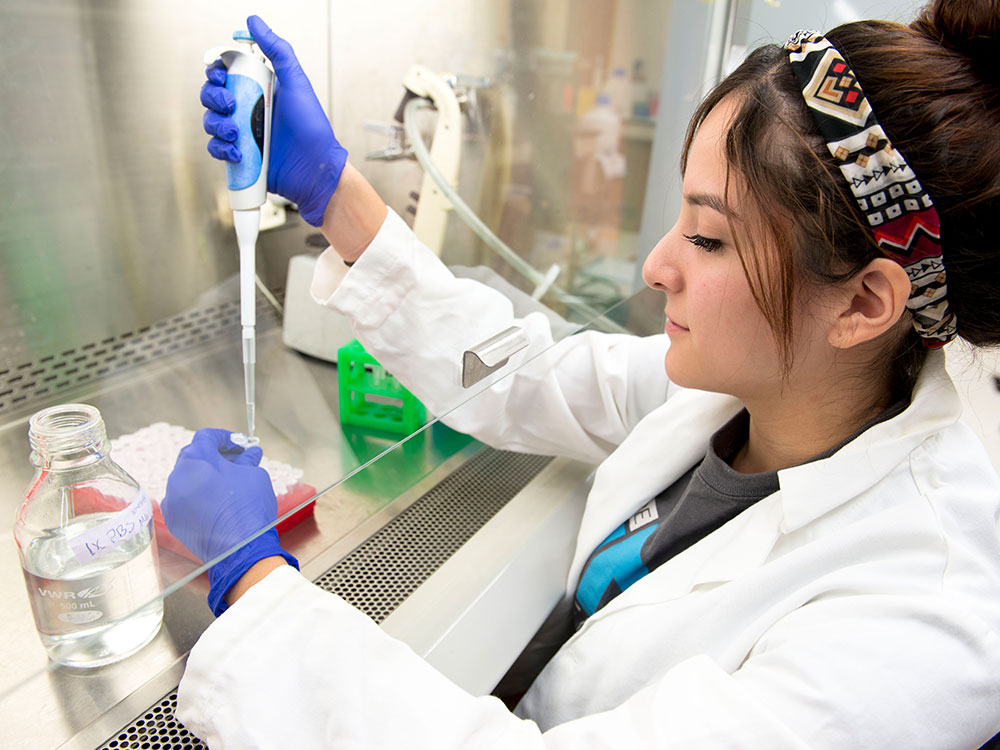
The College of Sciences is an institutional leader in both teaching and research. Participating in research will help you become an investigative problem-solver and a more competitive graduate. Our world-class faculty will help you sharpen your scientific skills so they can be applied to make tangible, life-changing solutions.
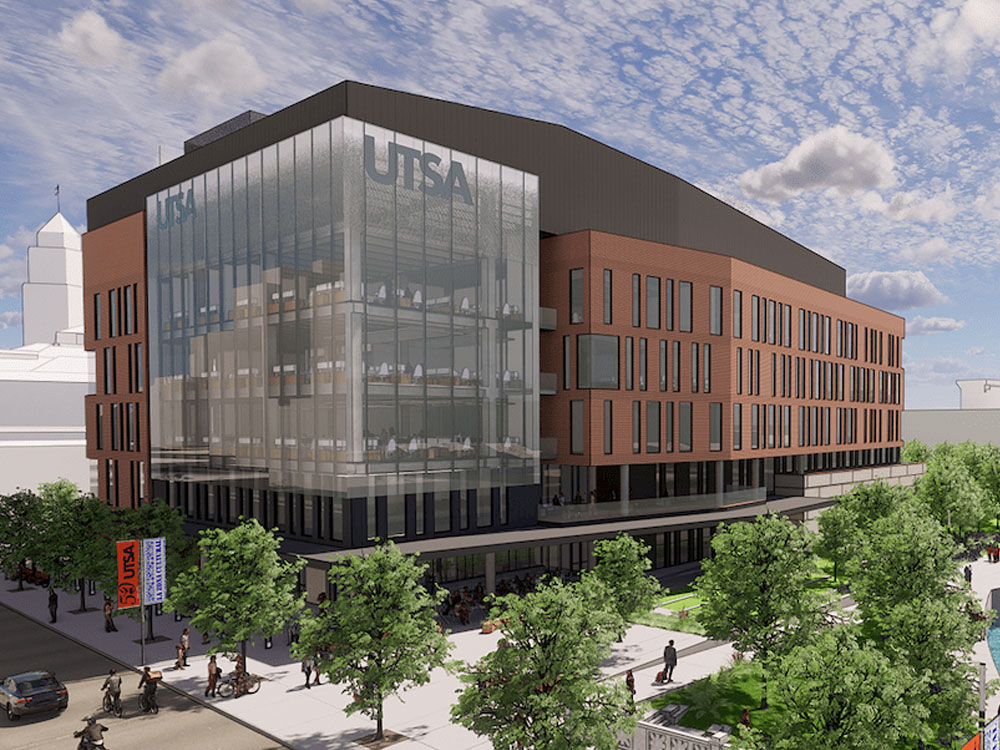
You’ll have access to state-of-the-art facilities like the newly opened 160,349 square foot Science and Engineering Building, the Mesquite Living Laboratory, which houses an outdoor classroom that promotes environmental education, and the School of Data Science, which is located downtown and focuses on training a highly-skilled workforce in the fields of cybersecurity, data analytics, and digital asset management.
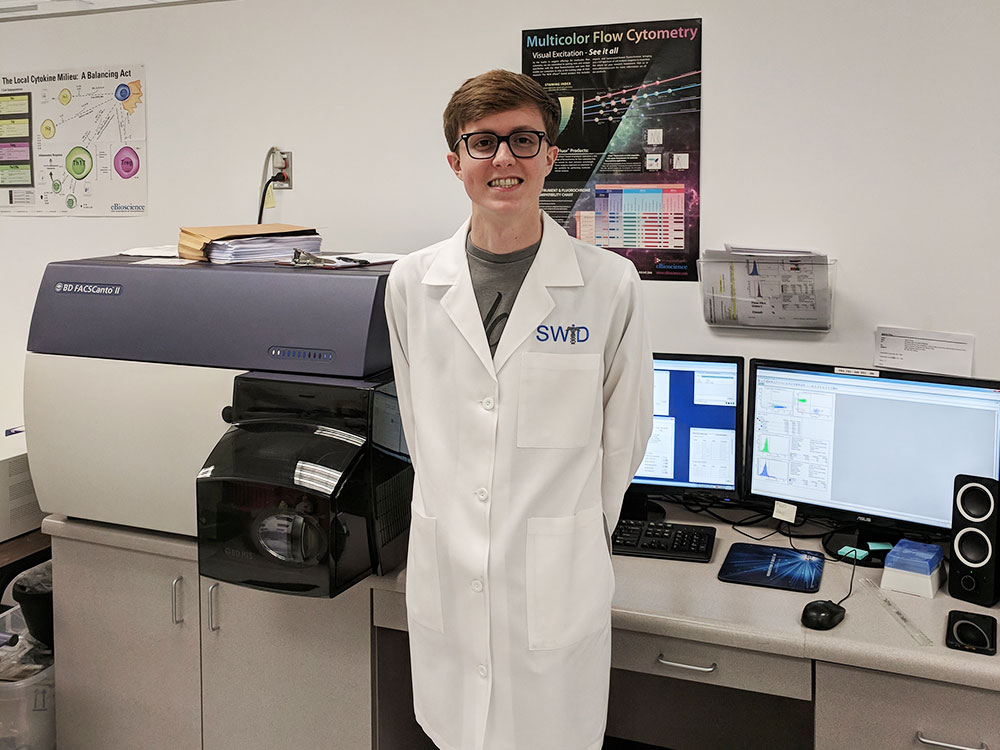
Internships allow you to obtain work experience, explore a chosen career path and increase your marketability to employers. Students can access Handshake, UT San Antonio’s jobs portal, to search for jobs and internships and recruiting and event information. UT San Antonio’s Career Center has a COS career counselor who provides internship opportunities and advice to students across every science major.
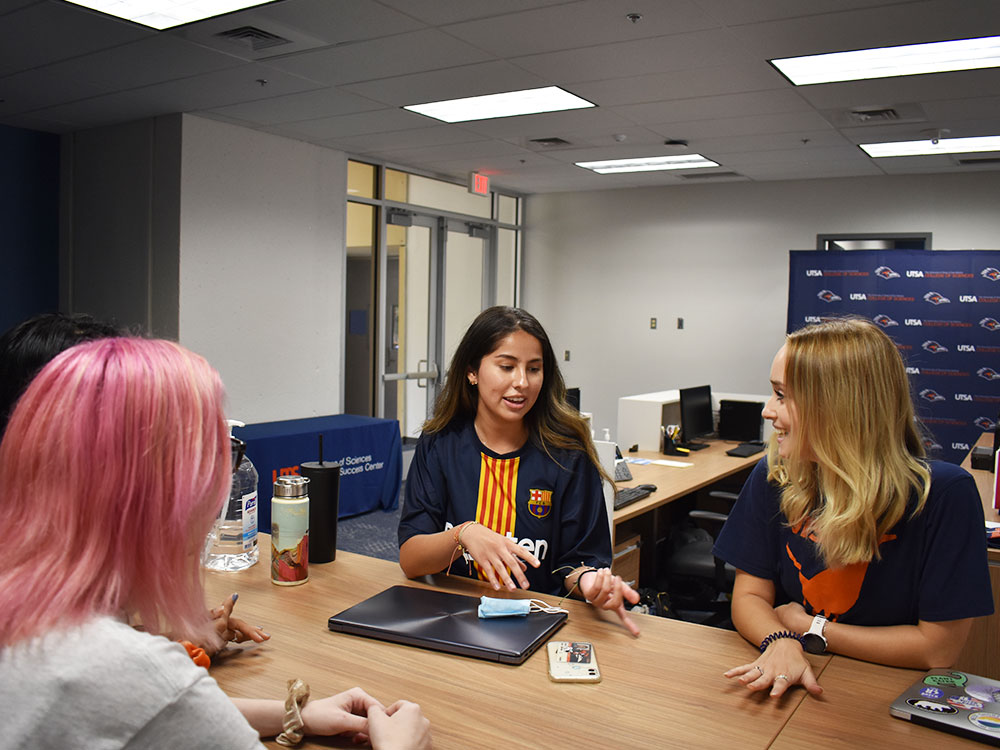
Student Success
UT San Antonio is all about your success. Our experiential learning initiative takes what you learn in the classroom and helps you apply it to real life. As a student in the College of Sciences (COS), you will explore, engage and reflect on your experiences to launch your career in a global society. The COS Student Success Center is a one-stop resource to help you achieve your academic, personal and professional goals. Receive tutoring, find internships, connect with industry professionals for job opportunities, and enhance your professional development skills through the center’s comprehensive programming.